How to Choose and Install a Home EV Charger: Complete Guide
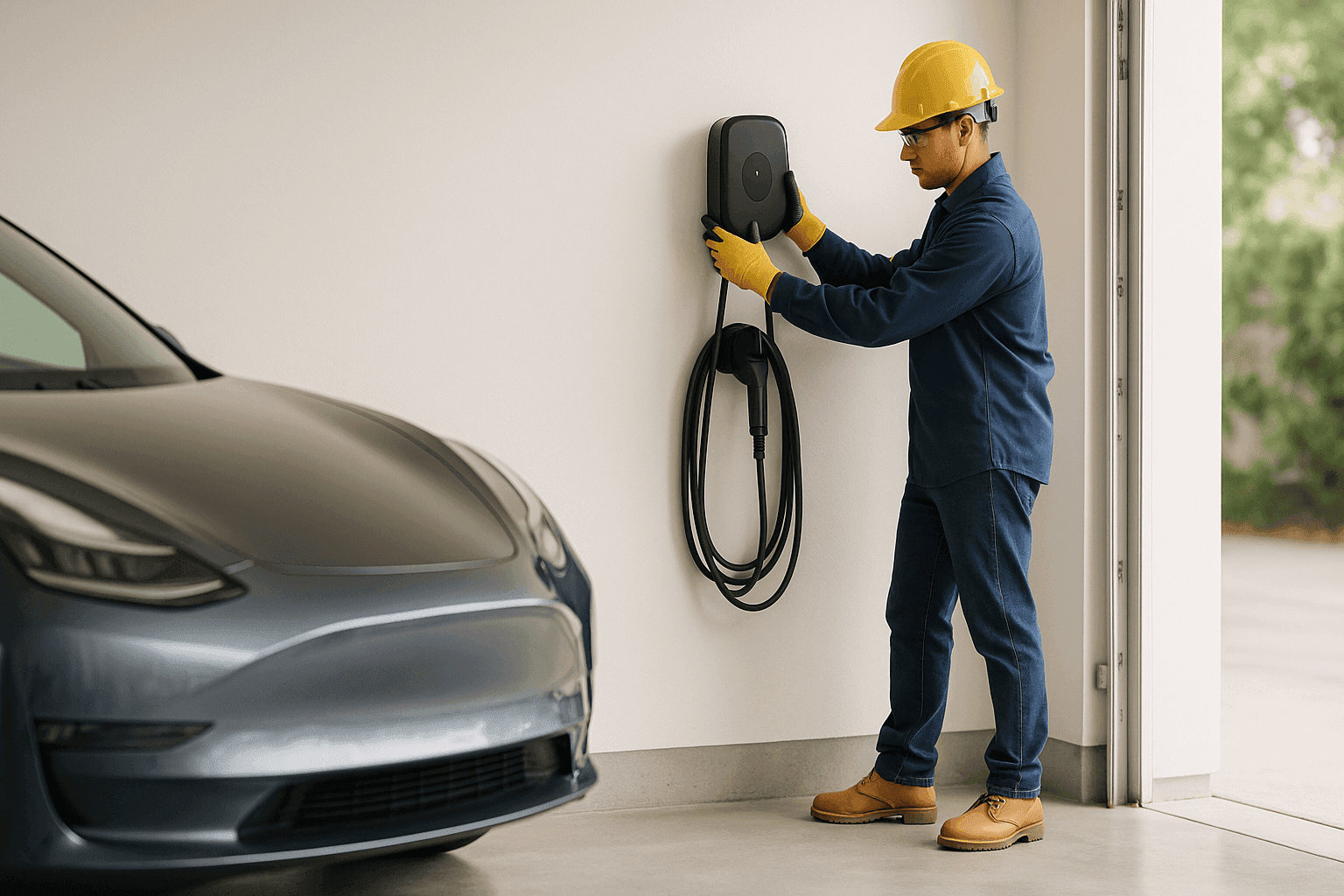
Charging your electric vehicle at home feels like the future—until you try to sort through all the charger options, wiring requirements, and safety codes. You want the right fit, installed safely, and to never worry about running out of juice before morning. We get it. As electricians, we hear these concerns every week from homeowners just like you.
Brighten Up Electricians has seen every kind of home, panel, and charging setup out there. Whether you’re new to EV ownership or upgrading your current setup, this guide makes it simple. We’ll walk you through every step, answer the big questions, and share what really matters for safe, seamless charging.
Types of Home EV Chargers ⚡
Let’s start with the basics. Not all chargers are created equal. Picking the right one is a bit like choosing between a garden hose and a fire hydrant—it comes down to how fast you want your car ready and what your home can handle.
Level 1 Chargers
- Plug-and-play: Uses a standard 120V outlet (the one your toaster uses).
- Slow charging: Adds about 2–5 miles of range per hour.
- No special install: But can take all night (or longer!) for a full charge.
Level 1 is fine for plug-in hybrids or if you rarely drive. For most EV owners, it’s a trickle when you need a river.
Level 2 Chargers
- 240V power: Same as your oven or dryer.
- Much faster: Usually adds 20–40 miles of range per hour.
- Professional installation required: Needs a dedicated circuit and sometimes a panel upgrade.
- Smart features: Many come with Wi-Fi, scheduling, and energy tracking.
Most homeowners choose Level 2 for daily use. It’s fast, reliable, and ready for the next EV down the road.
Level 3/DC Fast Chargers
- Not for homes: These are the big, commercial units you see at highway rest stops.
- High voltage: Requires industrial-level power—think “city block,” not “living room.”
Stick to Level 1 or 2 for residential charging.
Decision Checklist for Charger Types
Ask yourself:
- How many miles do I drive daily?
- Do I want overnight charging, or do I need a faster turnaround?
- Does my home have a 240V circuit available?
- Am I planning for more than one EV in the future?
- Do I want smart features (app control, scheduling)?
Still unsure? A licensed electrician can help size up your needs and your home’s electrical system.
Assessing Your Electrical System
Before you buy a charger, peek under the hood—of your house. Your panel is like the heart of your electrical system. Is it healthy enough for an EV charger?
Power Requirements
- Level 2 chargers usually need a 240V, 40- to 60-amp dedicated circuit.
- Older homes may have limited panel space or capacity.
- Running multiple high-powered devices (like pool & spa electrical or air conditioning) means you need to check your available amps.
Panel Upgrades
If your home’s panel is maxed out, you might need:
- A subpanel just for the charger.
- An upgraded main panel (especially if it’s older or undersized).
- Additional safety devices, like surge protection.
A professional electrician can calculate your “load” and recommend the safest solution.
Permits and Code Compliance
- Most cities require permits for EV charger installs.
- Work must follow the National Electrical Code (NEC) and any local amendments.
- Inspections ensure your setup is safe and up to code.
Skipping permits or “winging it” risks insurance problems and, worse, fire hazards.
Installation Steps
Ready to plug in? Here’s how a typical home EV charger installation goes.
1. Site Walkthrough
- Electrician evaluates your panel, wiring, and the best spot for the charger.
- Checks for obstacles: distance from panel, wall space, outdoor weatherproofing, and Wi-Fi signal for smart chargers.
2. Obtain Permits
- Submit permit application (handled by your electrician).
- Schedule for any required inspections.
3. Electrical Upgrades (if needed)
- Upgrade panel or add subpanel if current system can’t handle the charger.
- Install additional safety devices, like surge protectors or GFCI breakers.
4. Install Charger Circuit
- Run new wiring from the panel to the charging location.
- Install the mounting hardware and charger unit.
- Connect and test the circuit.
5. Final Inspection
- City or county inspector checks the work.
- Once approved, you’re ready to charge.
A typical install takes a few hours to a full day, depending on your home’s setup.
Charging Safety Tips
Safety is non-negotiable. Here’s what matters most:
- Use a licensed electrician: Never DIY high-voltage wiring.
- Always follow the NEC and manufacturer’s instructions.
- Keep the charger dry: Use weatherproof covers for outdoor installs.
- Check cords and plugs regularly: Look for frays or damage.
- Don’t use extension cords: They can overheat and cause fires.
- Label the charger circuit in your panel.
- Install surge protection: Protects your charger and vehicle from power spikes.
Still have questions? The U.S. Department of Energy and National Fire Protection Association offer guidance on EV charging safety.
Common Installation Questions
How much does it cost to install a home EV charger?
- Costs vary based on the charger type, electrical upgrades, and permit requirements.
- Most homeowners spend a few hundred to a few thousand dollars.
- Upgrades like new panels, trenching, or long wire runs add to the price.
How long does installation take?
- Simple installs may take half a day.
- Panel upgrades or complex wiring could stretch to a full day or more.
- Inspections might add extra time, depending on local scheduling.
Do I need to upgrade my electrical panel?
- Not always, but many older homes do.
- If your panel is full or undersized, an upgrade is often required.
Ongoing Use and Maintenance
Charging should be easy—and safe—for years to come. Here’s how to keep it that way:
- Test your charger monthly: Use built-in test functions if available.
- Inspect for wear: Outlets, plugs, and cords can degrade over time.
- Schedule regular electrical safety inspections.
- Keep area around charger clear: Avoid clutter and flammable materials.
- Update software: Many chargers use firmware updates for safety and features.
If you notice any issues—like overheating, tripped breakers, or strange noises—contact an electrician right away.
Code Compliance and Best Practices
Your installation must meet the National Electrical Code (NEC) and any local requirements. This covers:
- Proper circuit sizing.
- GFCI protection for outdoor and garage outlets.
- Correct wire types and conduit.
- Clear labeling.
City inspectors enforce these rules for a reason: they keep your home and family safe.
Decision Checklist
Before you start, make sure you’ve:
- Checked your daily driving and charging needs.
- Assessed your home’s electrical panel and capacity.
- Decided on Level 1 or Level 2 charger.
- Consulted with a licensed electrician.
- Budgeted for possible panel upgrades and permits.
- Scheduled a safety inspection after installation.
Final Thoughts
A home EV charger is one of the smartest upgrades you can make, but it’s not plug-and-play for every house. By understanding your options, power needs, and installation steps, you’ll charge confidently and safely—for years to come.
Ready to get started? Have more questions about Pool & Spa Electrical near you, or want a trusted electrician for your home’s next project?
Call Brighten Up Electricians now — or reach us anytime at 877-725-5126 .